


Bibimbap is a delightful explosion of flavors, textures, and colors that will transport your taste buds straight to Korea. Imagine a vibrant bowl filled with perfectly cooked rice topped with sautéed vegetables, tender meat, a sunny-side-up egg, and a generous drizzle of spicy gochujang. The aroma wafts through the air, beckoning you to take that first glorious bite.
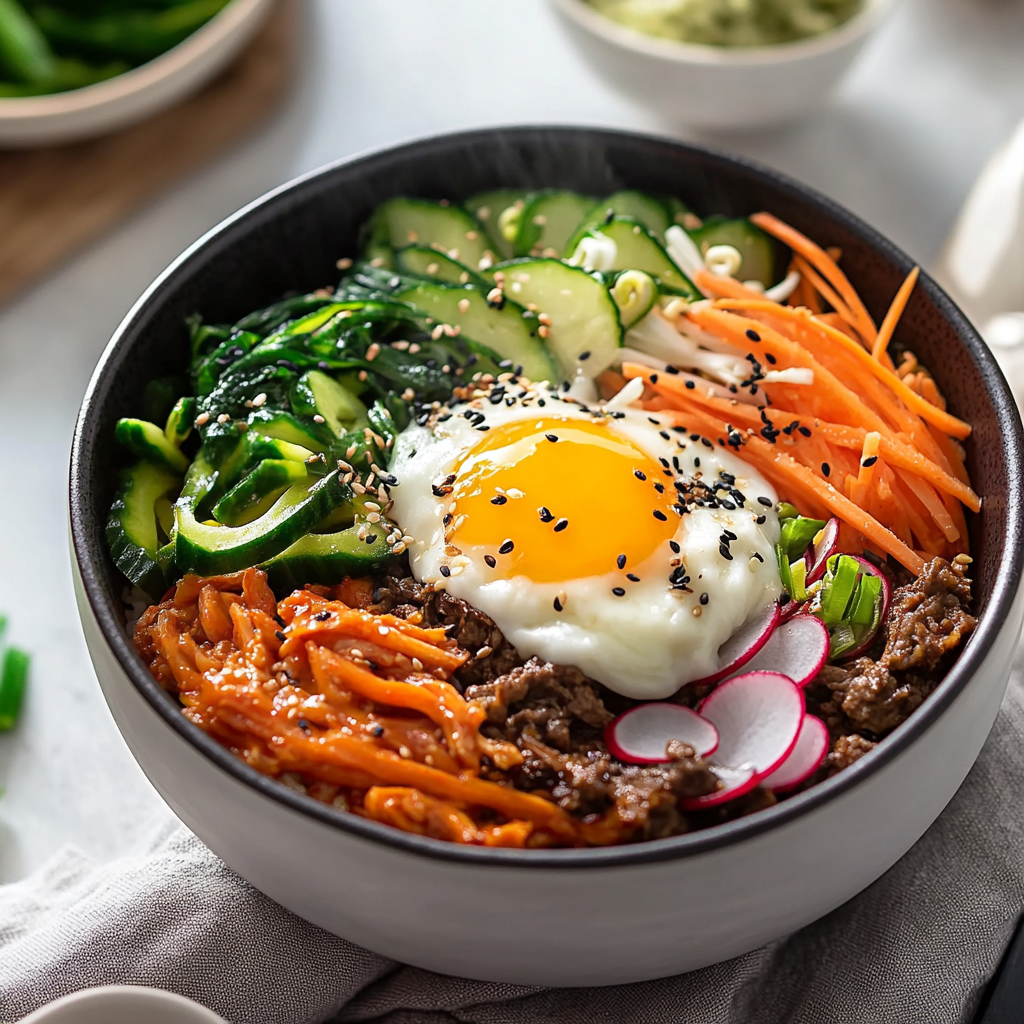
This dish holds a special place in my heart as it reminds me of family gatherings where we all gathered around the table, each adding our favorite toppings. It’s an experience wrapped in warmth and connection—a culinary hug in a bowl! Whether it’s a cozy weeknight dinner or the star of your next potluck, bibimbap promises to deliver a flavor experience that will leave everyone craving more.
Why You'll Love This Recipe
- This bibimbap recipe is incredibly easy to prepare, making it perfect for busy weeknights
- The blend of flavors creates an irresistible taste sensation that will impress anyone
- With its colorful presentation, this dish is sure to be a showstopper at any meal
- Bibimbap is versatile; customize it based on your dietary preferences or what’s available in your fridge
I still remember the first time I served bibimbap at a family gathering; my cousin declared it “the best thing ever!”
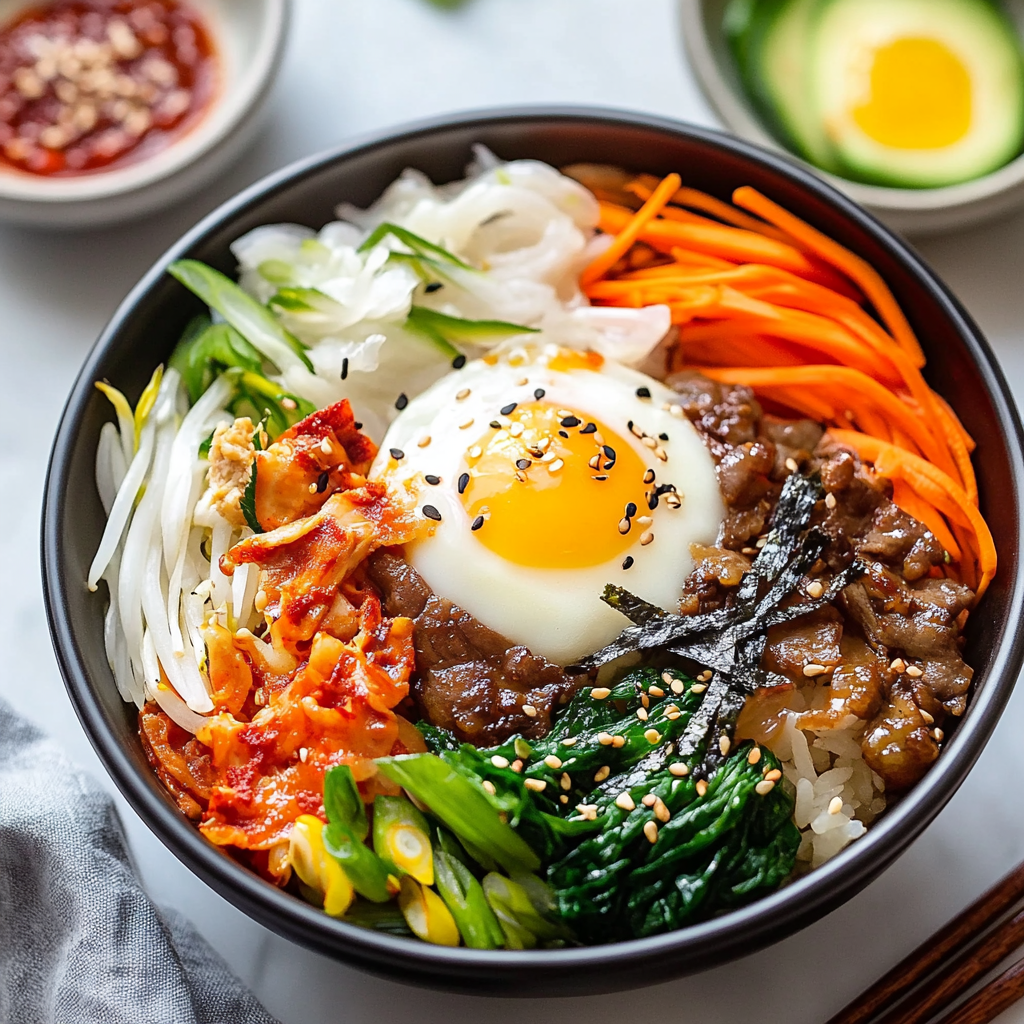
Essential Ingredients
Here’s what you’ll need to make this delicious dish:
-
Cooked Rice: Use short-grain rice for the best sticky texture—it’s essential for holding everything together.
-
Mixed Vegetables: You can use carrots, zucchini, spinach, and mushrooms; the more colorful, the better!
-
Protein (Beef or Tofu): Choose your favorite protein—marinated beef or crispy tofu are both fantastic options.
-
Eggs: A perfectly fried egg on top adds creaminess and richness that ties everything together.
-
Gochujang (Korean Chili Paste): This spicy-sweet condiment gives bibimbap its signature kick; adjust the amount to taste.
-
Sesame Oil: A dash enhances the nutty flavor and aroma—don’t skip this ingredient!
The full ingredients list, including measurements, is provided in the recipe card directly below.
Let’s Make it together
Prepare Your Ingredients: Start by gathering all your ingredients; wash and slice vegetables into thin strips for quick cooking. Make sure everything is ready before you begin cooking.
Cook the Rice: Rinse 1 cup of short-grain rice under cold water until clear. Cook according to package instructions—this usually takes about 20 minutes for soft and fluffy rice.
Sauté the Vegetables: In a skillet over medium heat, add a little sesame oil and sauté your chosen vegetables until tender but still crisp—about 5-7 minutes should do.
Cook Your Protein: If using beef or tofu, marinate it briefly in soy sauce and garlic before cooking in the same skillet until browned and cooked through—roughly 8-10 minutes works well.
Fry the Eggs: In another pan over medium heat, crack eggs one at a time and fry until whites are set but yolks remain runny—about 3-4 minutes for that perfect sunny-side-up finish.
Assemble Your Bowl: In individual bowls, layer rice first, then arrange vegetables and protein on top. Finish with an egg on each bowl and drizzle gochujang generously. Enjoy with extra sesame oil if desired!
With each step leading you closer to that unforgettable bite of bibimbap bliss, you’ll realize how simple yet rewarding this dish truly is! So gather your loved ones around because this meal is meant to be shared (or devoured in secrecy)!
You Must Know
- Bibimbap is not just a meal; it’s a vibrant celebration of flavors and textures
- With its colorful ingredients, this dish captures the essence of Korean cuisine
- The balance of tastes makes every bite an adventure you won’t forget
- Perfect for impressing guests or enjoying a cozy night in
Perfecting the Cooking Process
Start by preparing your vegetables first, then cook the rice while marinating and searing the protein. This order saves time and ensures everything is hot when served.
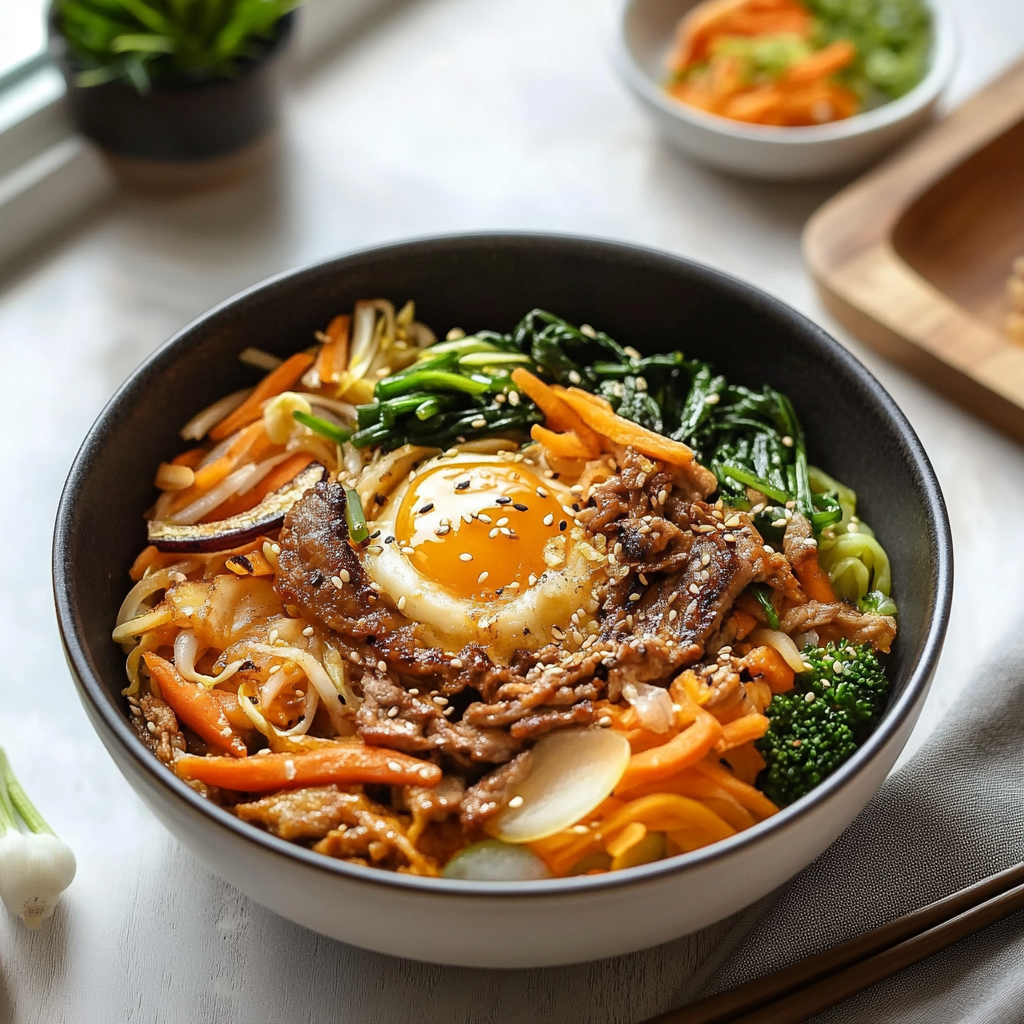
Add Your Touch
Feel free to swap in your favorite proteins, like tofu or chicken, and add extra spices for a unique twist. Customize each bowl to suit your tastes!
Storing & Reheating
Store leftovers in an airtight container in the fridge for up to three days. Reheat gently on low heat or enjoy cold for a refreshing twist.
Chef's Helpful Tips
- Use day-old rice for better texture; it absorbs flavors beautifully without becoming mushy
- Don’t overcrowd the pan when cooking veggies for that perfect crispiness
- Lastly, experiment with different sauces to elevate your bibimbap game!
The first time I made bibimbap, my friends raved about it so much that they thought I had trained under a master chef! Their compliments still warm my heart.
FAQ
What is bibimbap?
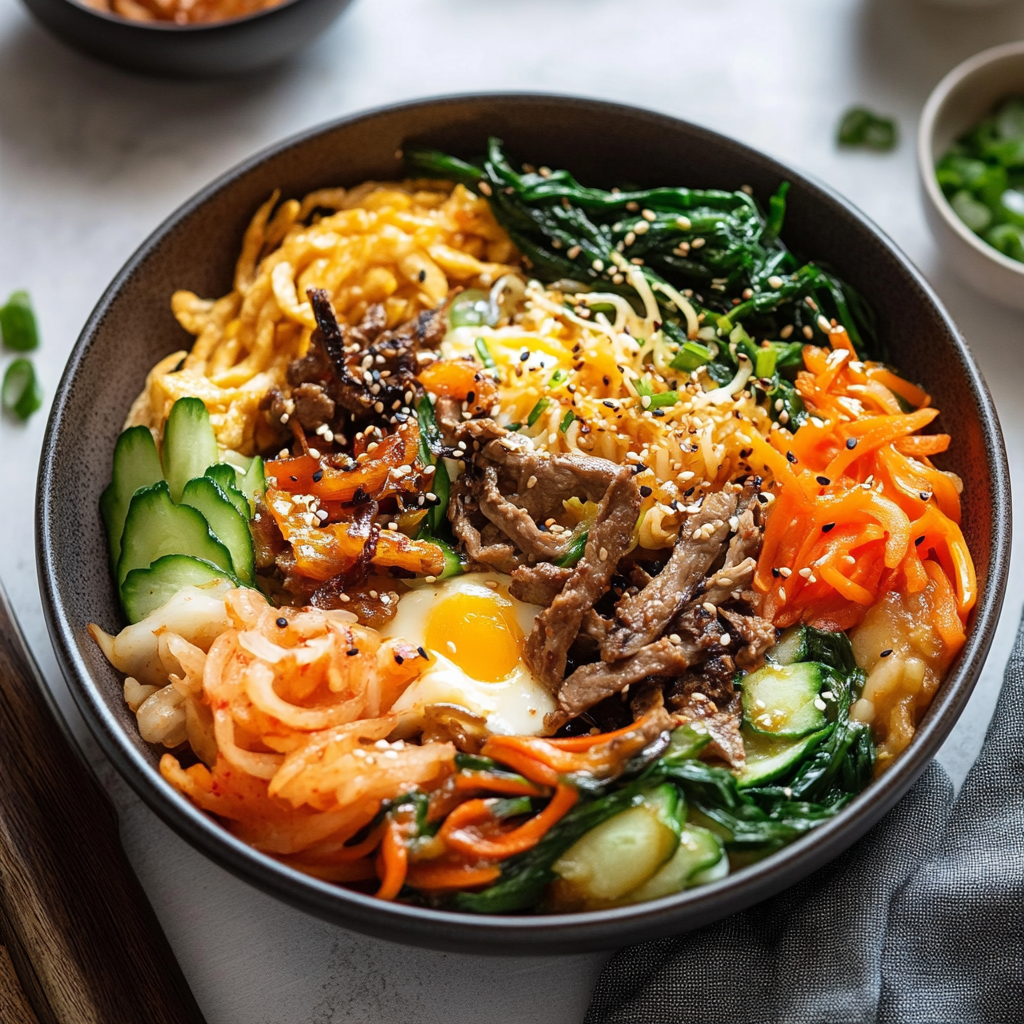
Bibimbap is a traditional Korean rice dish topped with assorted vegetables, meat, and egg.
Can I make bibimbap vegetarian?
Absolutely! Just skip the meat and load up on more veggies or tofu for protein.
What sauce goes well with bibimbap?
Gochujang sauce adds a spicy kick, but you can use soy sauce for less heat.
Bibimbap
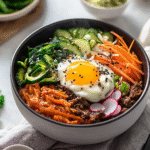
Bibimbap is a colorful and flavorful Korean rice dish that combines sautéed vegetables, tender meat, and a perfectly fried egg, all topped with spicy gochujang. This easy-to-make recipe is perfect for busy weeknights or festive gatherings, allowing you to customize each bowl with your favorite ingredients. Enjoy a culinary experience that brings warmth and connection to the table!
- Prep Time: 15 minutes
- Cook Time: 25 minutes
- Total Time: 40 minutes
- Yield: Serves 2
- Category: Main
- Method: Sautéing/Frying
- Cuisine: Korean
Ingredients
- 1 cup short-grain rice
- 1 cup mixed vegetables (carrots, zucchini, spinach, mushrooms)
- 4 oz marinated beef or crispy tofu
- 2 large eggs
- 2 tbsp gochujang (Korean chili paste)
- 1 tsp sesame oil
Instructions
- Prepare all ingredients by washing and slicing vegetables into thin strips.
- Rinse rice under cold water until clear; cook according to package instructions (approximately 20 minutes).
- Sauté mixed vegetables in a skillet with sesame oil over medium heat for 5-7 minutes until tender but crisp.
- Cook marinated beef or tofu in the same skillet until browned (about 8-10 minutes).
- Fry eggs in a separate pan until whites are set and yolks are runny (3-4 minutes).
- In individual bowls, layer cooked rice, sautéed vegetables, protein of choice, and top with a fried egg. Drizzle with gochujang.
Nutrition
- Serving Size: 1 bowl (400g)
- Calories: 540
- Sugar: 5g
- Sodium: 680mg
- Fat: 18g
- Saturated Fat: 4g
- Unsaturated Fat: 14g
- Trans Fat: 0g
- Carbohydrates: 82g
- Fiber: 5g
- Protein: 22g
- Cholesterol: 186mg